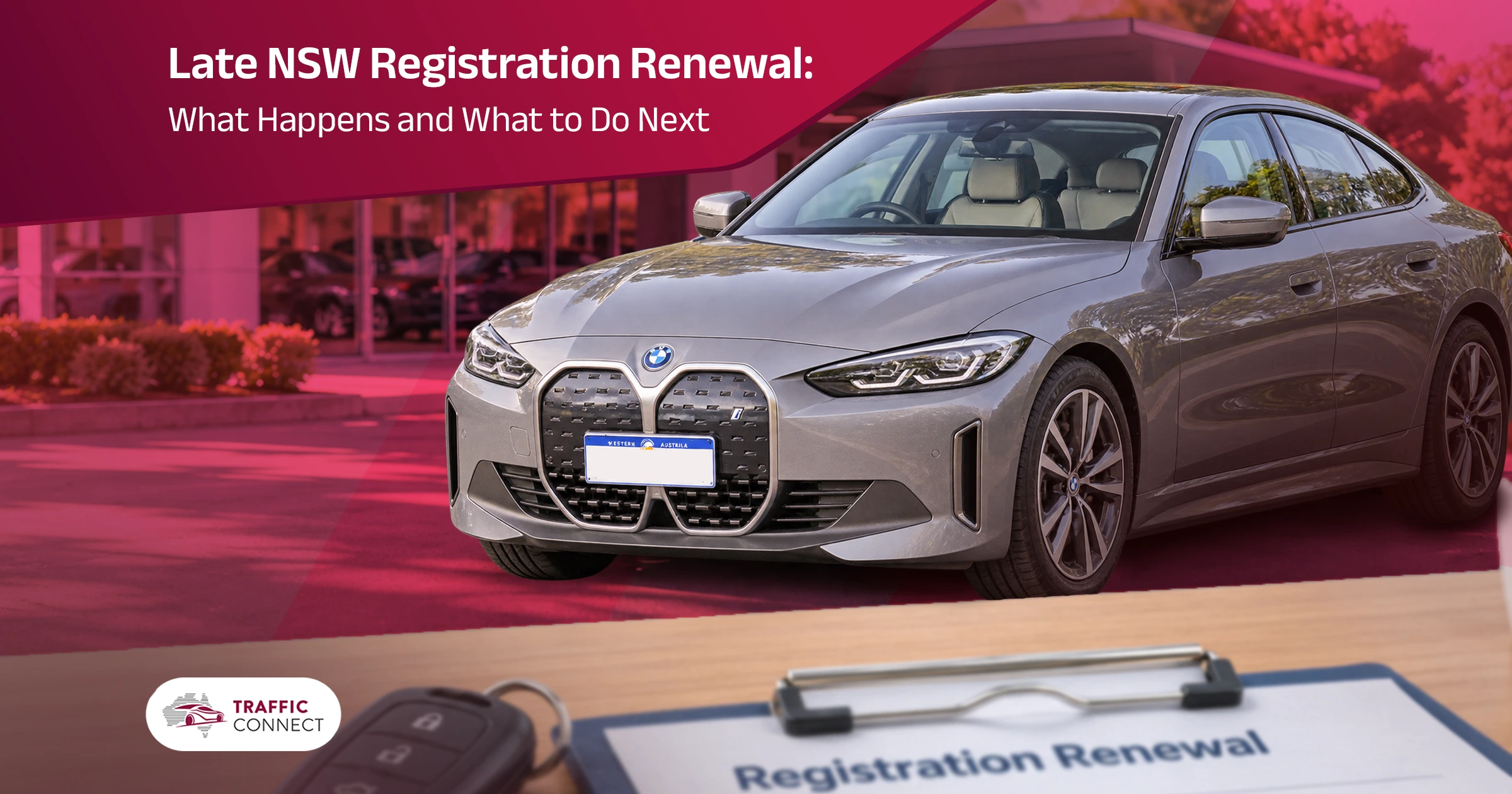
It’s easy for anyone to forget to renew his or her vehicle registration in New South Wales (NSW). If you’ve forgotten to renew your registration, you’ve been on vacation, or you simply forgot the date, you need to know what to do if your registration has expired and how to get it back on track.
Vehicle registration in NSW is renewable on expiry date in order to maintain the vehicle’s registration for road use. Vehicles lose their registration if registration is canceled, and then it is illegal to drive them on public roads.
The great news is that you can typically re-register before the expiration date for your registration without the complete re-registration procedure. If registered for over three months, however, then the registration lapses and further measures must be taken.
By knowing when the car needs to be renewed, what Compulsory third party (CTP) insurance requirements are involved, what vehicle inspection is, and which fees apply, you can help to resolve the situation and avoid additional issues.
If you registered yesterday or weeks ago, here are some tips on what you learned and what you can do next.
Key Takeaways
- NSW vehicle registration must be renewed by its expiry date.
- An expired registration means the vehicle is unregistered and must not be driven on public roads.
- You can generally renew an expired registration within three months of the expiry date.
- If registration remains expired for more than three months, it is automatically cancelled and the vehicle must be re-registered.
- Current CTP insurance, commonly known as a green slip, is required for most vehicles before registration can be renewed.
- A vehicle safety inspection, known as a pink slip, may be required depending on the vehicle and its registration circumstances.
- Late renewal does not provide a full new registration term from the original expiry date.
- If the vehicle needs re-registration, you may require an Authorised Unregistered Vehicle Inspection Scheme (AUVIS) report, commonly known as a blue slip.
- Always check the official Service NSW website for the latest requirements, fees, and registration options.
Why Is Timely Vehicle Registration Renewal Important?
Most cars on NSW roads are registered. Maintaining up to date registration means your vehicle complies with the legal registration conditions and has the necessary CTP insurance cover.
If the vehicle is not re-registered when the registration term expires, then it gets unregistered. This doesn’t just mean that you can’t drive it normally, though you may have comprehensive car insurance and think the car may be fine.This doesn’t just mean that you can’t drive it normally, but you may have comprehensive car insurance or you think the car may be fine.
Driving an un-registered car can come with some heavy price tags. It can also mean that the vehicle is not covered by CTP insurance, which is designed to provide cover for certain injuries resulting from motor vehicle accidents.
Staying on top of your registration will prevent this from occurring. If this is the case and you have already passed the expiry date, the most crucial first step is to cease driving the car and find out about the options for renewing it.
What Happens When Your NSW Registration Expires?
The following steps will be taken based on the length of the expired registration.
It is important to know that the three-month period has significance because if your registration is cancelled, the process will change.
Registration Expired Recently
Most renewals of registration can be made by following the normal renewal procedures when the registration has not expired for more than three months.
Prior to payment, make sure your CTP insurance policy is up to date and if your vehicle needs to be inspected for safety.
Renewals can usually be done online through Service NSW or in a service Centre if you are unable to renew online.
Keep in mind that your vehicle is not registered until the renewal is successful.
Registration Expired for More Than Three Months
Registration is cancelled after 3 months if not renewed.
It is not possible to renew it using the normal online renewal service at this stage. Rather, it is necessary to apply to re-register the vehicle.
This generally involves:
- Completing the appropriate registration application.
- Providing proof of identity and registration entitlement.
- Arranging the required vehicle inspection.
- Obtaining CTP insurance.
- Paying the applicable registration fees.
- Managing the vehicle’s number plates as required.
Re-registration involves additional steps compared with renewing an existing registration, so it is important to check the requirements before proceeding.
How to Renew Your Expired NSW Vehicle Registration
If your registration has expired within the past three months, follow these steps to get it renewed.
Step 1: Check Your Registration Status
First look at the information on the vehicle’s registration and expiration.
You can check your renewal options and the eligibility for standard renewal on the official Service NSW website.
In most cases, you will provide the Registration Number (plate number) on your car or the Billing Number on your renewal notice or Registration Certificate.
Registration will not be accepted if expired for more than three months, re-registration will be required.
Step 2: Arrange Your CTP Insurance
In order to renew a registration, most vehicles need compulsory third party (CTP) insurance (also called a green slip).
The CTP insurance will protect certain personal injuries that may occur in a motor vehicle accident, as defined by policy and law.
If your CTP policy has been cancelled, book a new CTP policy with an authorised NSW CTP insurance company.
You don’t need to send the insurance documentation to Transport for NSW yourself as the insurer will normally do this electronically.
Ensure that the insurance term matches that of the registration period you are going to choose.
Usually, there is an exception for trailers or caravans from the norm of the CTP requirement.
Step 3: Check Whether Your Vehicle Needs a Safety Inspection
Most light vehicles older than 5 years must have an annual safety check prior to renewal.
This is known as a pink slip and is carried out by an approved inspection station.
An inspection will be required if so, it will be mentioned on your registration renewal notice.
If your car requires a safety inspection, make an appointment before the renewal date. If the car doesn’t pass, then the required repairs must be made before it can pass and be registered.
Most light vehicles will have a NSW safety inspection report that is good for six months, so don’t miss the deadline for the report’s validity period.
Step 4: Renew Your Registration
If your CTP insurance and inspection are scheduled to be renewed, then the registration renewal can go forward.
Most vehicles can be renewed on the Service NSW website, if they are eligible.
If you can’t do it online you can see a Service NSW Centre.
Read the directions, verify all information and make all required registration fees.
You should keep your receipt so you can use it as proof of the payment.
Step 5: Confirm Your Registration Is Current
Once payment is made confirm the successful processing of the renewal.
For BPAY payment, please allow payment processing time. Service NSW recommends that it can take two to three business days for a BPAY payment to arrive and registration is not renewed until the complete payment has been received.
It is not assumed that making the initial move to start a payment transaction or arranging insurance makes the vehicle registered.
Check the registration status prior to operating the vehicle again.
What If Your Registration Has Been Expired for More Than Three Months?
Once registered for more than three months, it’s usually necessary to re-register the car, rather than renew it.
The process involves further testing to make sure the car can be registered and is safe to operate.
Step 1: Arrange a Blue Slip Inspection
A blue slip is an inspection report made under the Authorised Unregistered Vehicle Inspection Scheme (AUVIS).
The study ensures that the vehicle’s safety, design and identity are met before it can be registered.
Typically, an AUVIS inspection will be mandated after a registration has been denied for over three months.
An inspection shall be carried out by an authorised inspection provider. Please ensure that the requirements are up to date before arranging the inspection, as reports are not valid forever.
Step 2: Obtain CTP Insurance
Generally, you need to get CTP insurance prior to re-registering the vehicle.
Compare the different types of CTP insurance available in NSW and select a policy to meet the registration requirements.
Ensure that the insurer has the right information for the vehicle to ensure that the policy will be connected to the registration process.
Step 3: Prepare Your Registration Documents
Gather the documents required for the re-registration application.
These may include:
- The completed application for registration.
- Proof of identity.
- Proof of registration entitlement or vehicle ownership.
- A valid blue slip inspection report.
- CTP insurance details.
- The vehicle’s number plates, if available.
- Payment for applicable registration fees.
The exact requirements can vary depending on the vehicle and its circumstances.
Step 4: Visit a Service NSW Centre
In most cases, it will be necessary to go to a Service NSW Centre to re-register a vehicle that has been expired for more than 3 months.
Submit application, documents, number plates and fees as applicable.
On approval of the application, the registration details and number plates for the vehicle will be issued.
Under no circumstances drive on public roads until the vehicle is legally registered for that purpose, unless a valid permit is issued expressly for such purpose.
Can You Drive a Car With Expired Registration in NSW?
No, an unregistered vehicle is not allowed to be driven on NSW roads.
If you have registered the vehicle just one day earlier, it will no longer be registerable for regular road use even if the registration has expired one day earlier.
Not driving with current registration can result in fines and then you won’t have the code-protection that you’re looking for from CTP insurance coverage.
If you must go to an inspection station or an appointment for registration, find out if you are eligible for an unregistered vehicle permit or special authorisation.
You should not assume that you have permission to drive the vehicle once you have an inspection or paid the insurance premium.
Before making the trip, if you are not sure how to move the vehicle legally, speak to Service NSW or Transport for NSW.
Will You Get a Full Year of Registration if You Renew Late?
Not necessarily.
If you re-register after the registration date, the new registration cycle is from the payment date. The end date, however, is still set to the same registration cycle.
This means that you won’t be given a full year’s registration from the date of payment.
NSW Government guidance says that you can request that you cancel your current registration and get a new registration period if you wish for a full registration term. This can require extra processes and expenses, however.
Please note that before you select this option, you should contact Service NSW to ensure that your vehicle would be cancelled and re-registered accordingly.
The easiest way to prevent part of the registration period being lost is to plan ahead.
Can You Renew NSW Registration Online After It Expires?
Yes. Eligible vehicles can generally have their registration renewed online for up to three months after the expiry date.
To renew online, you will typically need:
- Your vehicle’s number plate or billing number.
- Current CTP insurance details, where required.
- A valid safety inspection report, if applicable.
- Payment for the registration renewal.
If your registration was expired for more than three months or your vehicle is classified into another category, which requires in-person registration, you may not be able to renew it online.
If you can’t do this online, refer to the instructions Service NSW have provided or visit a Service Centre.
Understanding Late Registration Renewal Costs in NSW
The cost of renewing or re-registering a vehicle depends on the applicable fees and your vehicle’s circumstances.
When dealing with an expired registration, consider the following potential expenses:
- Registration fees: The applicable cost of registering the vehicle for the selected period.
- CTP insurance: The cost of a green slip, where required.
- Safety inspection: The cost of a pink slip if a safety inspection is required.
- AUVIS inspection: The cost of a blue slip if re-registration requires an unregistered vehicle inspection.
- Number plates: Additional charges may apply when new plates are required.
- Other applicable charges: Fees can vary depending on the vehicle type and registration circumstances.
Late renewal does not always result in a separate late renewal fee but there may be other fees depending upon your situation.
It’s possible that the total cost of re-registering a vehicle after it’s been cancelled could be higher, as there may be extra inspection and registration fees.
Please use fee information and the NSW Government fee registration calculator to work out the estimated fee before applying.
A Simple NSW Late Registration Renewal Checklist
If your registration has expired, use this checklist to help you get back on track:
- Check the registration expiry date.
- Confirm whether the registration has been expired for less than or more than three months.
- Avoid driving the vehicle while it is unregistered.
- Check whether the vehicle needs a pink slip or blue slip.
- Arrange valid CTP insurance, where required.
- Gather the necessary vehicle and identity documents.
- Renew online if the vehicle is eligible.
- Visit a Service NSW Centre if re-registration or an in-person transaction is required.
- Pay the applicable registration and inspection fees.
- Keep your payment receipt and relevant documents.
- Confirm that the registration is current before driving.
- Set a reminder for the next renewal date.
Following these steps can help you avoid unnecessary delays and ensure that you complete the correct process for your vehicle.
Where to Get Official Information
For the latest information about late registration renewal, inspections, insurance, and re-registration requirements, refer to the official NSW Government and Service NSW websites.
State: New South Wales (NSW)
Authority: Transport for NSW and Service NSW
Official Website: NSW Government
Early or Late Registration Renewal: NSW Registration Renewal Rules
Final Thoughts
If you miss your NSW registration renewal date, you don’t necessarily have to repeat the registration process. Generally, one can renew a registration if they have not had it for more than three months by arranging all necessary CTP insurance and safety inspection prior to payment.
It is however, cancelled after expiration for more than three months and it is usually necessary to re-register.
The key point to keep in mind is, if the car’s registration has expired, then it is not registered. It is not to be driven on public roads until it is registered or there is another legal permission to drive it.
You can avoid any unnecessary complications by checking your registration status, understanding the deadlines and taking the appropriate steps to ensure you’re registered on time.