When you’re looking to purchase or sell a car in NSW, there’s more to it than just handing over the cash and shaking hands. Registration numbers is the one thing that many people may come across that surprises them– whether you’re selling the car and have to inform the correct parties or you’re the buyer trying to get the car registered in your name. This guide covers the essential facts for both sides to know to ensure there are no loose ends at handover time.
Key Takeaways
- Vehicle registration in NSW confirms your car is roadworthy and includes Compulsory Third Party (CTP) Green Slip insurance as part of the process.
- Sellers must notify Transport for NSW of the sale, while buyers need to transfer the registration into their name within a set timeframe.
- Buying privately means organizing your own CTP Green Slip before the transfer can be completed, since it isn’t automatically included.
- A safety check, known as an e-safety check or pink slip, is generally required for vehicles over a certain age before registration can be transferred.
- Moving to NSW from another state requires registering your vehicle locally within a set window after becoming a resident.
Why Vehicle Registration Matters
The registration of a car in NSW does not just happen after you’ve purchased or sold one. It assures that the car is safe, connects it to required Green Slip insurance, and safeguards both parties legally. When the sale is not registered, the seller may be held responsible to pay the fines or tolls incurred by the new owner, and the buyer may find himself driving a vehicle that is not legally in his name. This is an important step that will ensure that everyone involved is protected.
What You’ll Need Before You Start
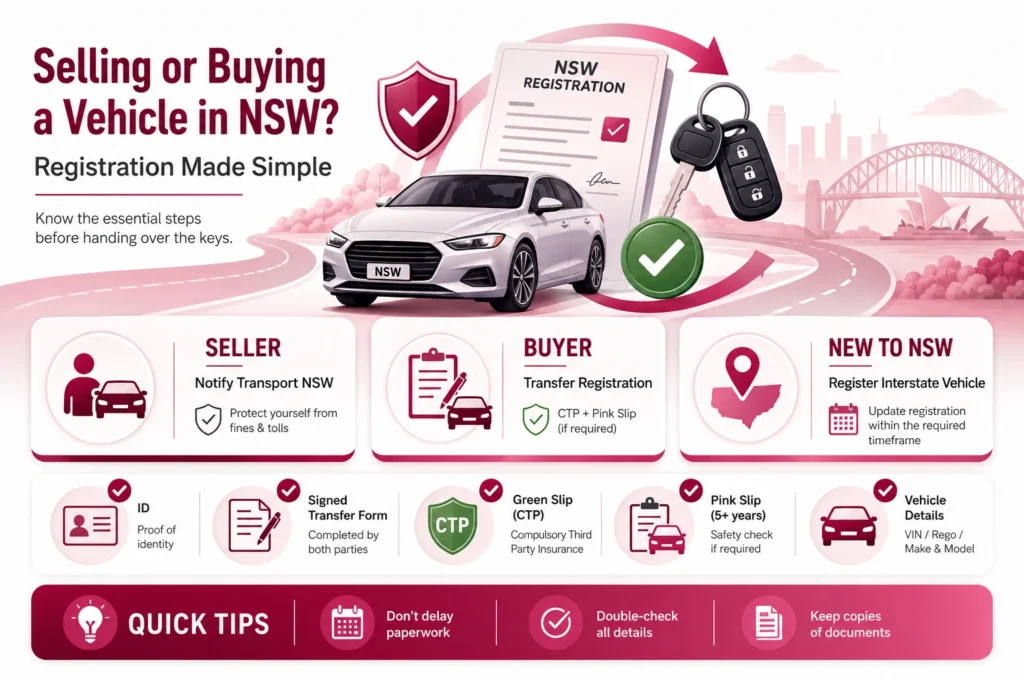
The amount of paperwork needed will vary depending on the fact that you are a buyer or a seller, but there are a few items that will crop up with either. You will need identification, the vehicle’s information (including the VIN or registration), and a transfer form signed by both the buyer and the seller. If you are transporting a motor vehicle from interstate then you will also be required to have further evidence that it complies with NSW identification and safety standards.
But it’s also important to find out early on if your car needs a safety inspection, as most used cars older than five years must have a pink slip before the registration transfer can be made.
Selling Your Vehicle
Being the seller, your job isn’t over after the cash changes hands. The sale must be reported to Transport for NSW within a specified time frame, including the buyer’s information and the date of sale. This will safeguard you against any fines, tolls or registration problems that the new owner may cause while the car is in their hands.
Buying a Vehicle
However, if you are purchasing privately, you will have to arrange your own Green Slip CTP insurance before you can transfer the registration to your name as the Green Slip does not automatically transfer with the car. You will also need to have a pink slip (if applicable), a signed transfer form, and proof of identity. While it may be more straightforward to buy from a dealership, as they may arrange registration and insurance on your behalf, you should check this in advance.
Moving to NSW with an Interstate Vehicle
If you’ve moved to NSW from another state or territory, you can usually register your car in NSW within a certain timeframe after you move here. This will usually include your interstate registration, proof the car is safe for NSW, and proof of new address. If you can resolve this issue early, it can stop issues that arise when you are no longer able to use your interstate registration.
Costs to Expect
The registration fees in NSW depend upon the weight, type and use of the vehicle. Green Slip CTP insurance is not included in your registration fee, and there are a number of different insurance companies in NSW that allow you to choose from a variety of different prices; you should compare them before choosing one. Also, if you are buying a vehicle, you will want to consider the stamp duty that will be applied on the sale price or market value of the vehicle, when it changes hands.
A Few Tips to Make It Easier
If a transfer paper work inspection is required, don’t wait until the last minute to get it booked, as this can take a few days to do depending on availability. Make sure all information on the transfer form is identical both sides as the buyer and seller, as there may be delays or rejections if it is not. If you have a special circumstance, such as a deceased estate transfer or a car with outstanding finance, it’s best to contact them directly to find out how to proceed instead of taking the “standard” approach.
Where to Get Official Information
It’s best to go right to the source for the most accurate and current requirements, fees and forms. Vehicle registration is handled by Transport for NSW at the state level and their website details the current regulations, provides estimates of registration costs and allows you to download the form(s) required: https://www.transport.nsw.gov.au
Final Thoughts
There are a few additional steps to purchase or sell a vehicle in NSW other than the handshake, but these steps are not difficult once they’re known. You don’t want to be held responsible for the car afterward, or you don’t want to have to wait to get the paperwork transferred to your name. Some preparation now equals one less hassle in the future.